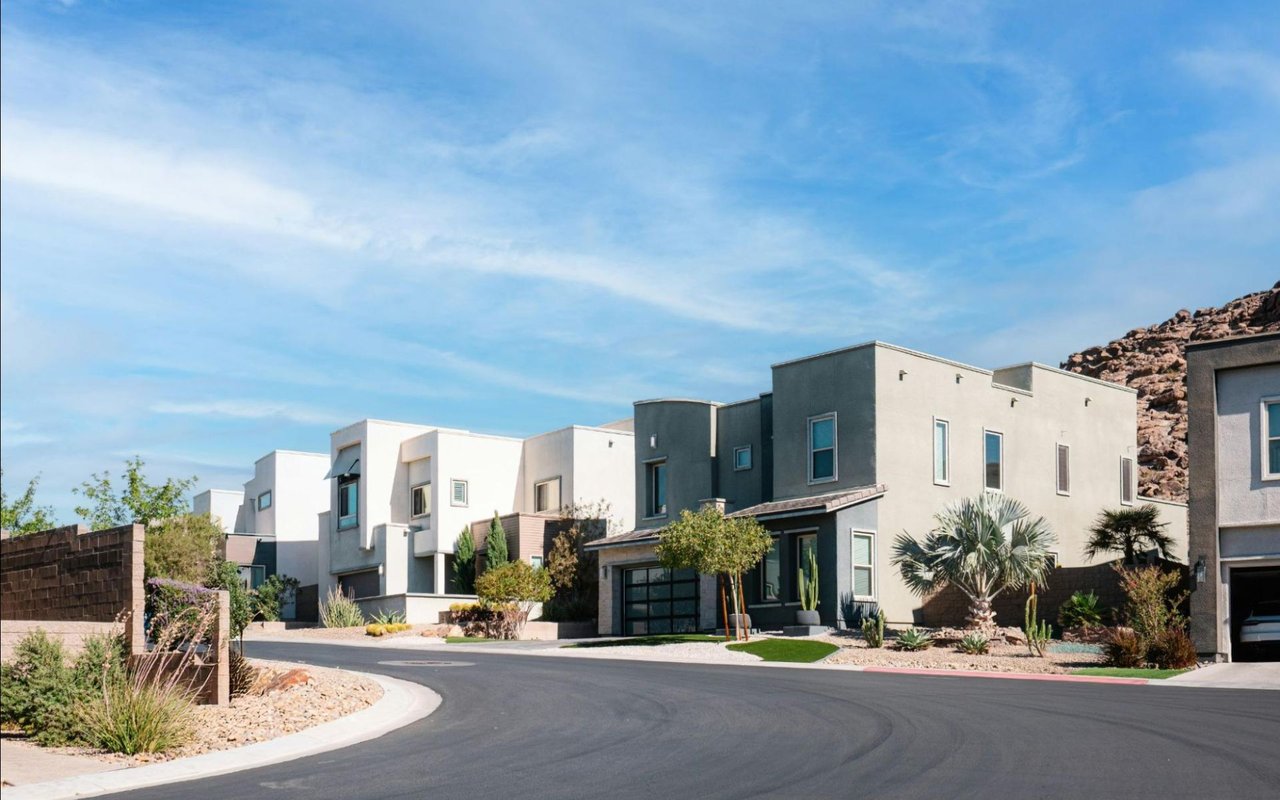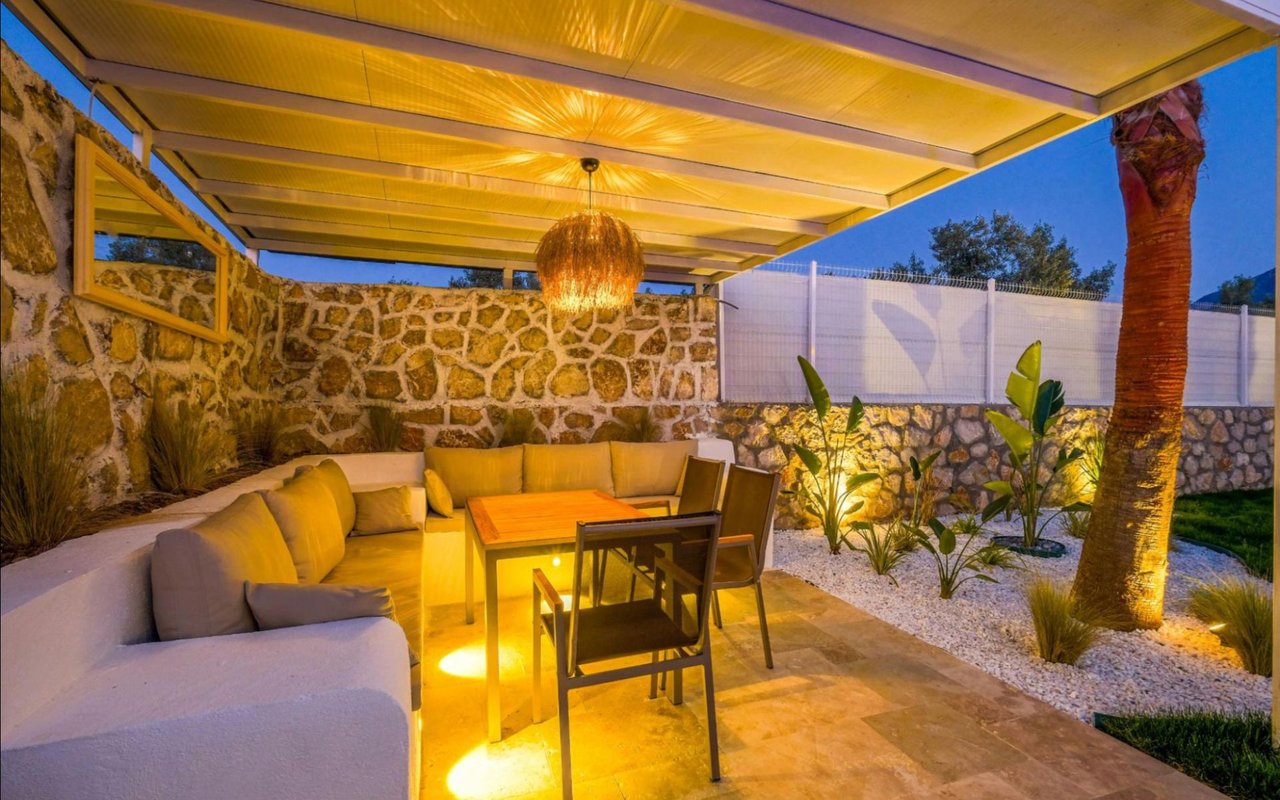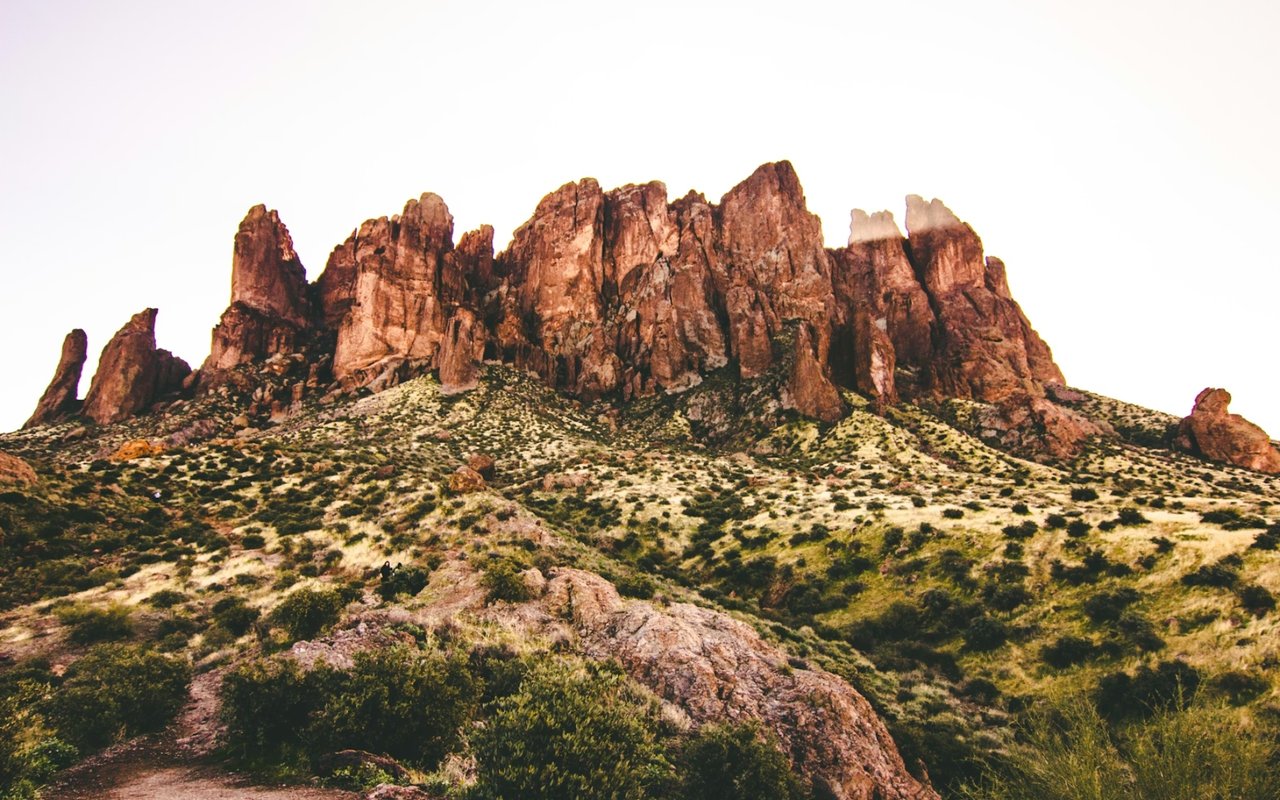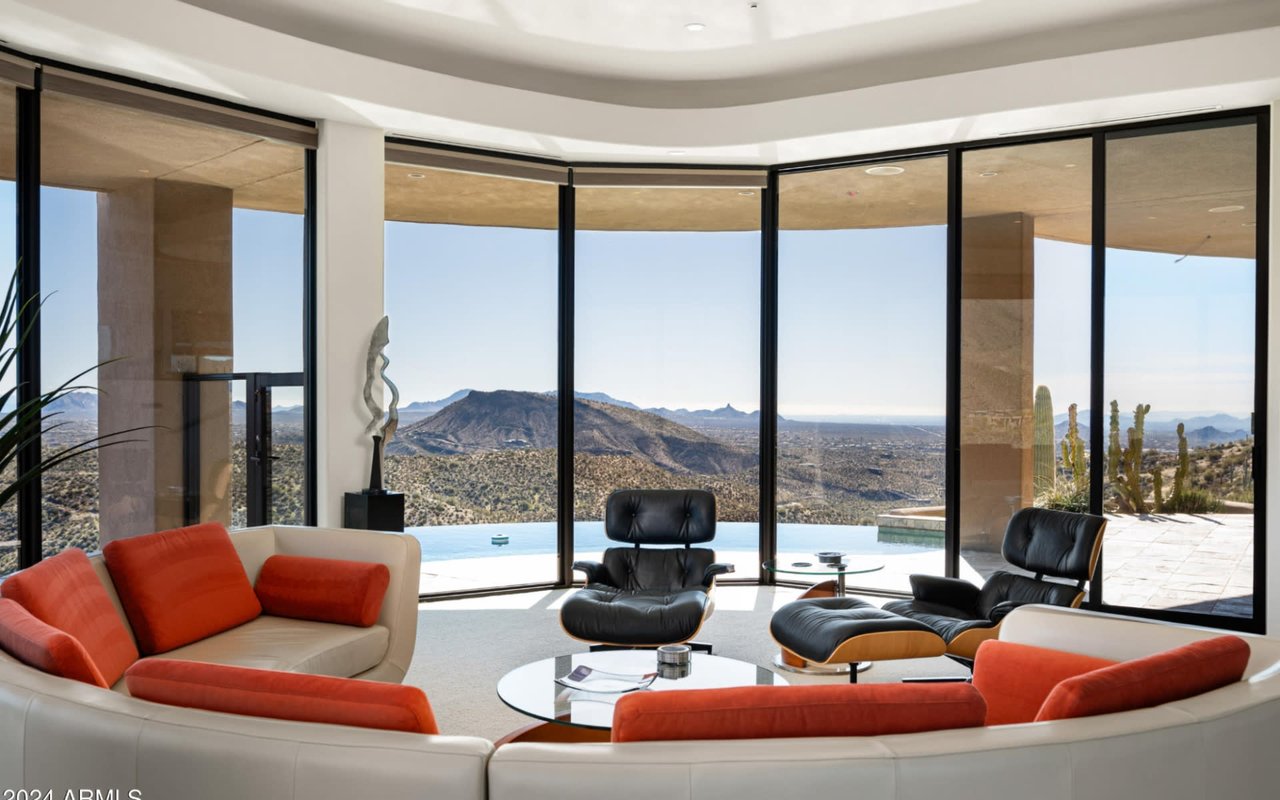
Geronimo Golf Course reopened in late September after a year of restoration. Most of that year went into how the course takes in, spreads and sheds water. The holes below Lone Mountain II, 7 through 13, include the one trouble spot the Club described in detail and the new comfort station members will find beside the 13th green.
What a Year of Work Replaced
In the Club's own reopening feature, Desert Mountain says the restoration "was driven by what Members couldn't always see." Irrigation lines were aging, the pump station was worn out, and the grass and bunker sand needed replacing. The Club's view was that the architecture deserved to be kept and the infrastructure needed work. Director of Agronomy Todd Bohn and Chad Goetz of Nicklaus Design led the project.
The work below ground came in four layers:
- A new pump station replaced the old one.
- HDPE irrigation piping replaced the aging PVC lines.
- A single-head irrigation system now allows precise, isolated watering. It comes with better sprinkler spacing, upgraded nozzles and software Bohn can run remotely, even from his smartwatch.
- The course was re-grassed with the same turf varieties used at Cochise. The Club credits the new grass with better color, durability, consistency and playing characteristics.
Isolated watering matters on a course like Geronimo. The Club's course page describes target fairways, island greens and elevation changes that create blind tee shots and blind approaches. On ground that rises and falls that much, a system that can water one spot without soaking the rest of the hole is the main tool for keeping low areas from staying wet while high ground dries out. According to the Club, the upgrades have improved how water is managed and distributed across the course.
The Ninth Hole's Low Spot
The Club named one problem area outright, and it sits in the middle of Lone Mountain II's stretch. On the ninth hole, a low area 50 to 75 yards short of the green kept collecting water, silt and debris. The crew installed two 12-inch underground pipes plus a sediment collection area upstream, so material is caught before it reaches the playing surface.
The same approach was used elsewhere on the course. Fairway bunkers were moved closer to the greens. Trees that blocked views and routes to the green were relocated. Fairways and tees were expanded. Rocks and boulders were either removed or buried, partly to improve play and partly to guard against erosion by steering water away from vulnerable fairways.
Here is what the Club has published about each hole Lone Mountain II overlooks. Pars come from the Geronimo scorecard dated February 2024. That card predates this year's tee expansions, so treat its yardages as a dated reference.
| Hole | Par | What the Club has said |
|---|---|---|
| 7 | 3 | No hole-specific restoration note published |
| 8 | 4 | A shorter par 4 with a very challenging green that has multiple tiers or plays deeper than it looks |
| 9 | 5 | New underground drainage and an upstream sediment collection area short of the green |
| 10 | 4 | No hole-specific restoration note published |
| 11 | 3 | One of Geronimo's four signature holes, along with No. 1, No. 6 and No. 18 |
| 12 | 5 | No hole-specific restoration note published |
| 13 | 4 | New comfort station beside the 13th green and 14th tee |
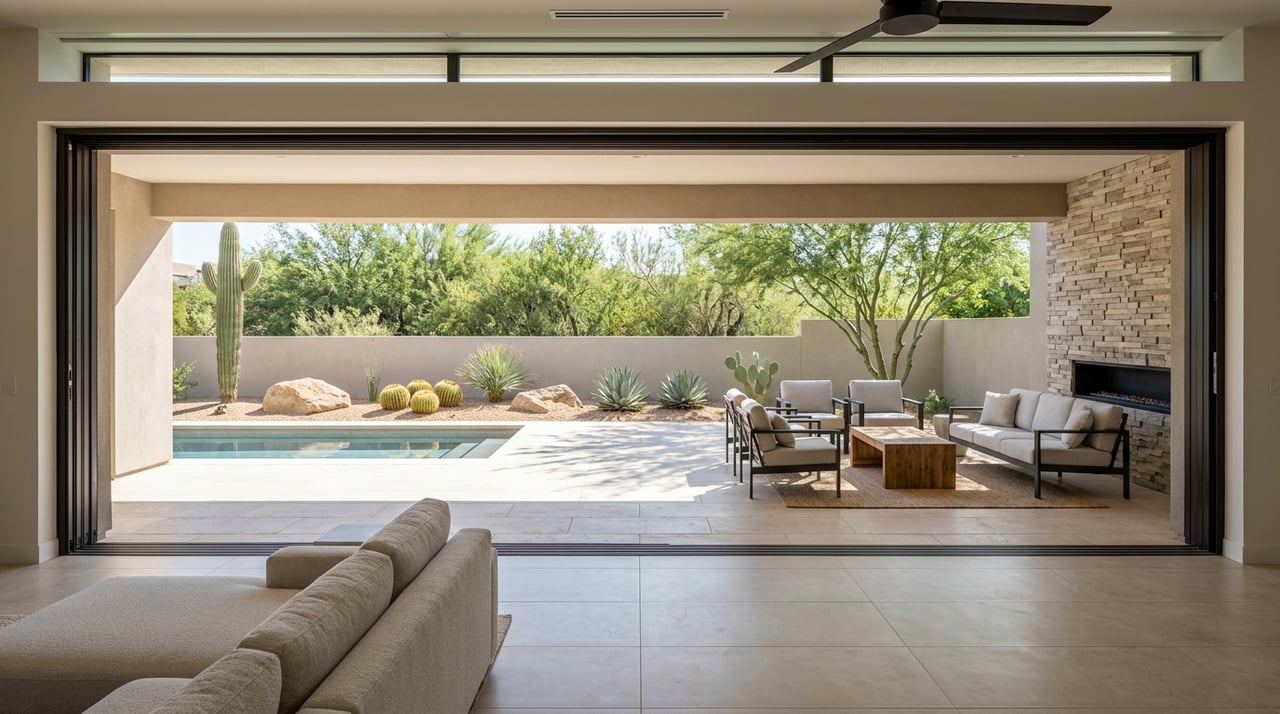
What Shows Up From the Patio
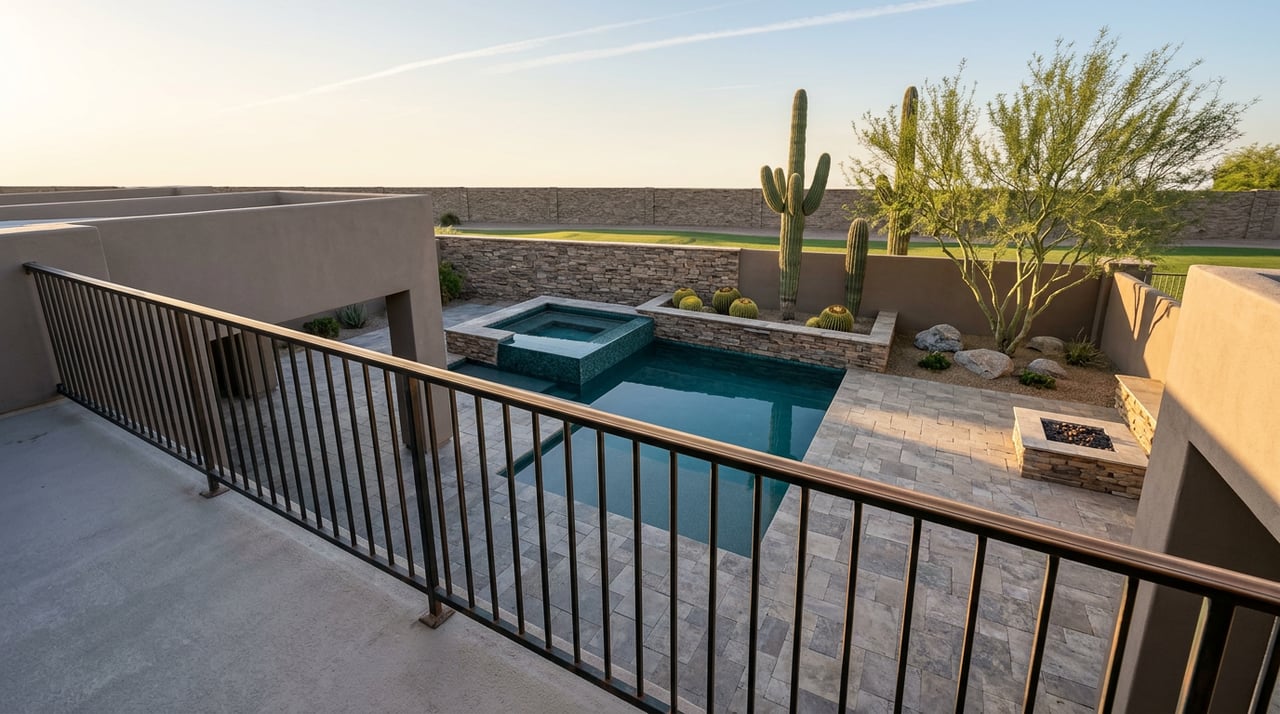
Most of the restoration happened underground, so homeowners will see less of it than golfers will. Two changes are easier to spot from above.
The first is the comfort station near the 13th green and 14th tee. It is one of two new stations, along with one at the sixth tee. The Club says both were built into their surroundings and brought down to ground level, so players no longer climb stairs to reach them.
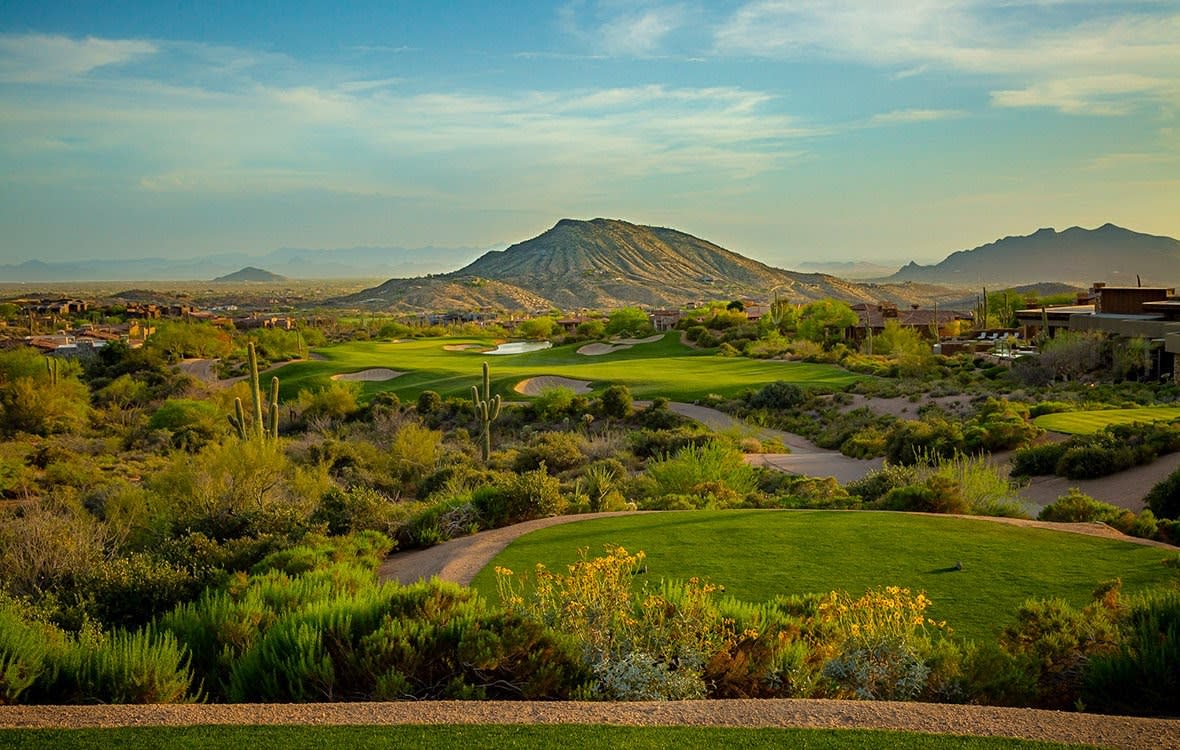
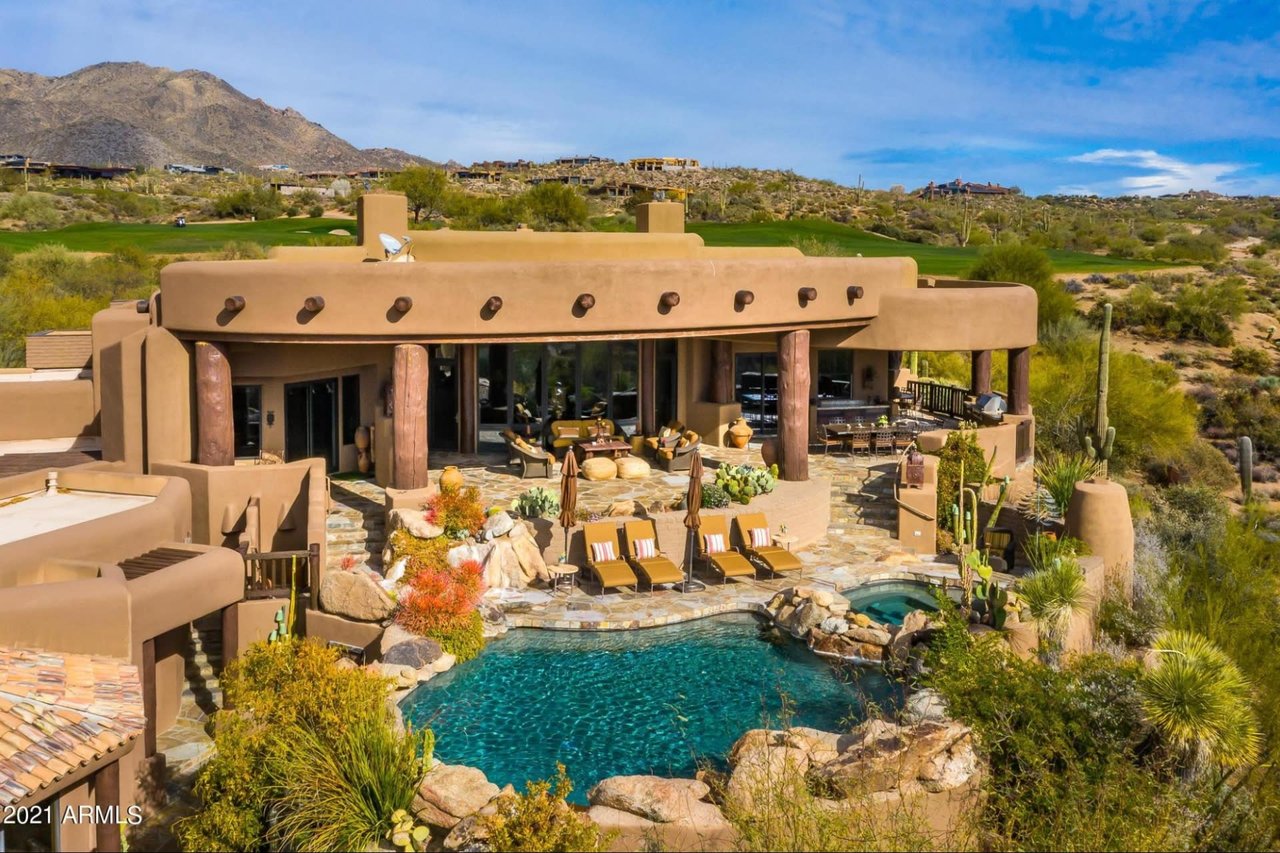
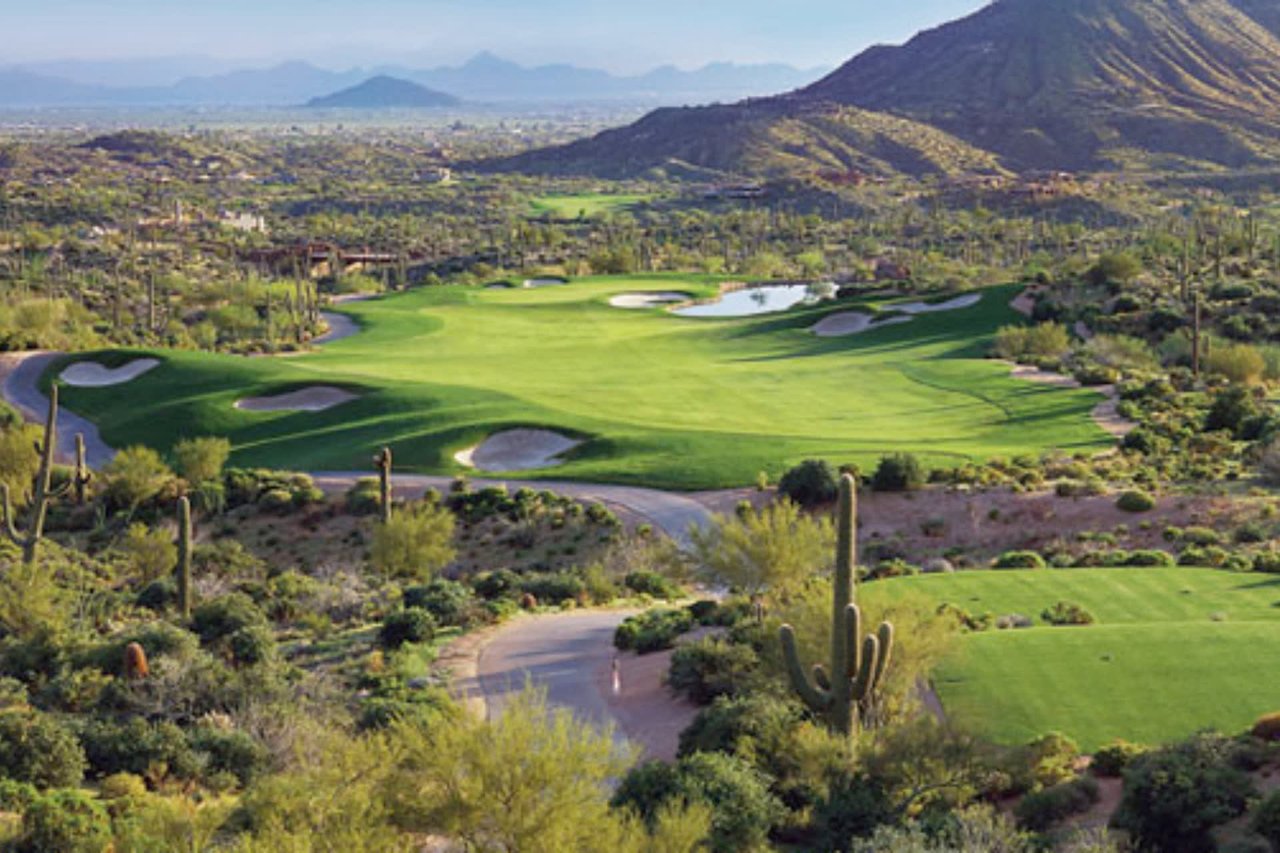
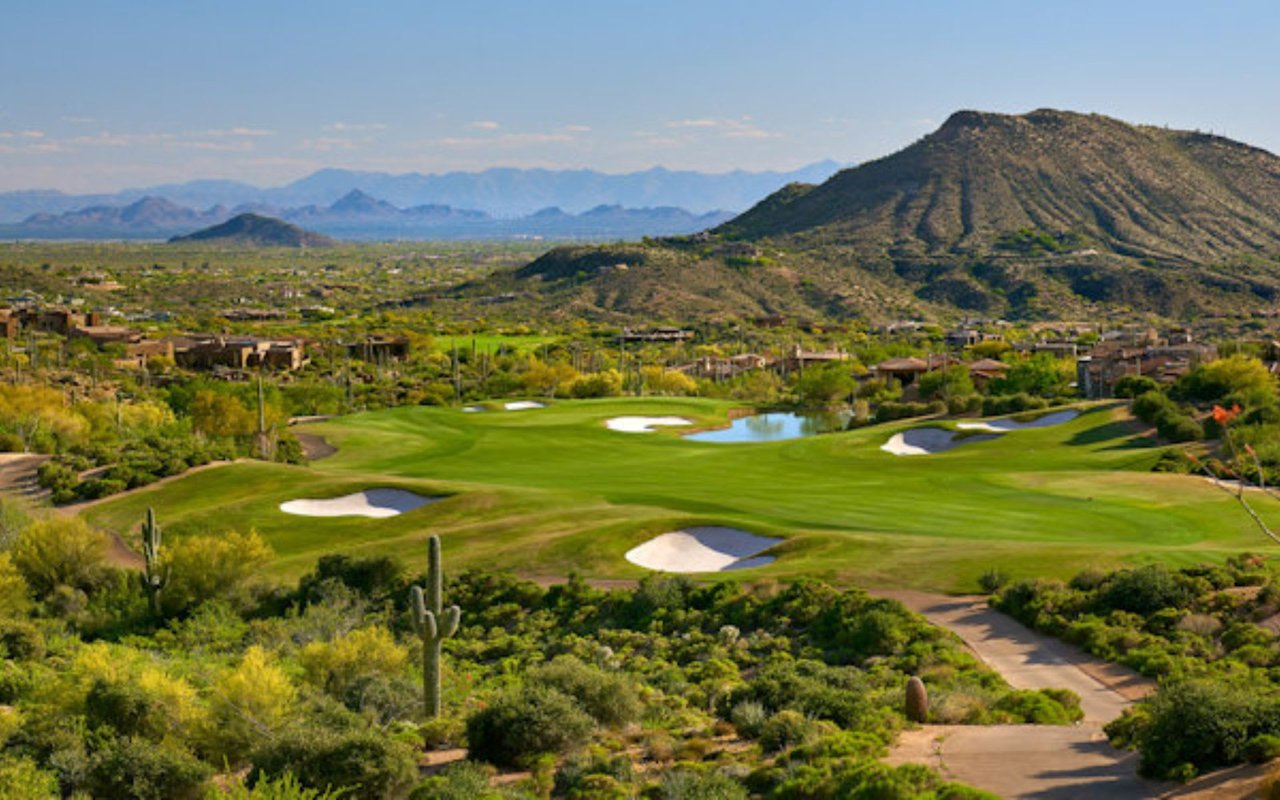
The second is the pruning. Across the course, the Club says careful pruning brought back "long-lost sight lines" and restored views that recall the landscape Nicklaus introduced in 1989. The Club hasn't said which holes were opened up. One of the photos in its feature is a drone shot of a Geronimo green with a pond beside it and Lone Mountain behind, though it doesn't say which hole. For anyone who wants to see the whole course before walking or playing it, the Club posted a flyover of all 18 holes with its reopening story.
Why This Winter's Color May Look Different
The new turf may also change how the view looks this winter. The Arizona Golf Association's 2026 overseeding schedule lists Geronimo as not overseeding this fall, with a reopening date of September 28, 2026. That's a change. A 2021 Club article described Geronimo, Cochise and Outlaw as bermudagrass courses overseeded with rye.
Desert Mountain hasn't explained the decision publicly. General turf guidance from the University of Arizona Cooperative Extension offers useful background. It describes bermudagrass that isn't overseeded as going dormant and "blonde" in winter, often staying off-color for about three months. The same guidance usually advises against overseeding newly planted bermudagrass in its first winter, because competition from winter grass can stress the turf when it greens up and regrows in spring. That is general lawn guidance, not a statement from the Club. It is consistent, though, with a course that was just re-grassed.
How Geronimo Fits Into the Fall Rotation
Geronimo came back while other courses are taking their turns closing. The Arizona Golf Association schedule lists these dates for the rest of Desert Mountain:
- No. 7: overseeding, September 14 to September 27, 2026
- Cochise: overseeding, September 28 to October 11, 2026
- Outlaw: overseeding, September 28 to October 18, 2026
- Apache: overseeding, October 12 to October 25, 2026
- Renegade: not overseeding, reopening listed as September 28, 2026
- Chiricahua: listed as closed, with no reopening date
These are scheduled dates, not confirmed reopenings. For Geronimo, the Club's own feature separately confirms a late-September return. Chiricahua is closed for a restoration of its own. A Club video tracks preparation work from early June through August 2026, and no reopening date has been published.
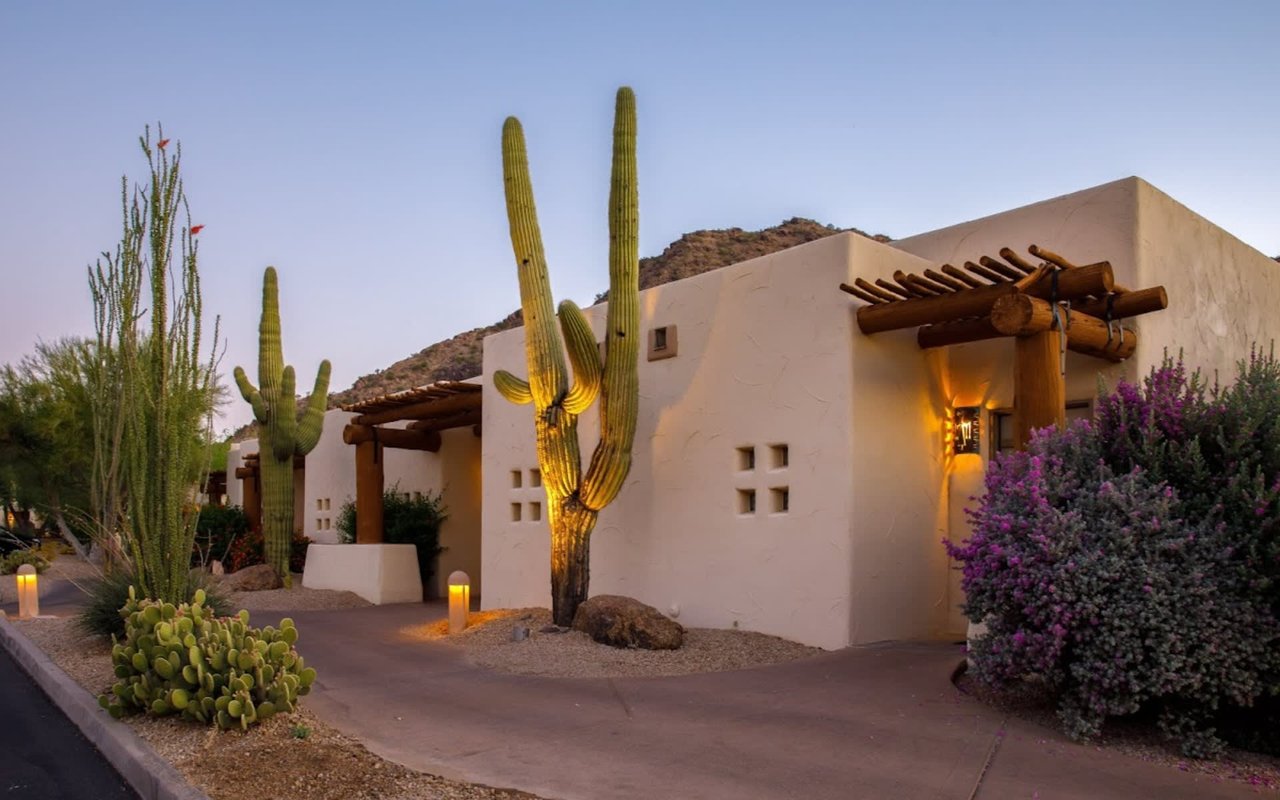
After a round, members end up at the 52,000-square-foot Cochise/Geronimo Clubhouse, which serves both courses. The building is a Frank Lloyd Wright-inspired design that mixes historic Native American, desert and contemporary styles. It holds the Club's Western art collection, the pro shop, and a practice area with two short-game areas, a two-sided range and several putting greens. The Range House serves breakfast and lunch outdoors, and the main dining room hosts themed dinners. Culinary Director Chef Bertrand Bouquin, a Maître Cuisinier de France, oversees all of Desert Mountain's restaurants and grills. The Club hasn't posted fall hours for either venue.
The Course the Pipes Were Built to Protect
Geronimo opened on October 31, 1989, as Desert Mountain's third Jack Nicklaus Signature design. Nicklaus, Jim Carter and a 19-year-old Phil Mickelson played the first round. All three had won NCAA individual titles, and none of them broke par. Carter shot 73, and Nicklaus and Mickelson each shot 74. In its early years the course stretched past 7,400 yards with a 77.1 course rating. Nicklaus first pictured it as the community's tournament course, but The Tradition went to Cochise from 1989 to 2001 because Cochise's terrain was easier for spectators.
The course built its reputation anyway. Even before it opened, Greg Norman won the playoff for the 1988 Desert Scramble with a birdie putt on the par-3 18th. Geronimo later hosted the American Junior Golf Association's Rolex Tournament of Champions in 1996 and 2002, and the Southwestern Amateur's 100th-anniversary edition in 2015. The 18th was included in the 2000 book The World's 500 Greatest Golf Holes. The new pumps, pipes and drainage were put in to protect that layout, and the Club describes the result as a course "modernized below ground and thoughtfully refined above it." The 37th anniversary of Geronimo's opening round falls on October 31, 2026, about a month after the reopening.
If you own a home above Geronimo and want to know how this year's restoration, the course view and the rotation calendar affect your property, Power+ can help. We live inside Desert Mountain and follow these changes as members. Schedule a private consultation with Desert Mountain experts.